In2Genome
February 25, 2026MicroBioWines
February 25, 2026
Porto NS
1. PROJECT NAME: Porto NS
2. PROJECT ID: POCI-01-0247-FEDER-017736
3. MAIN GOAL: Selection of non-Saccharomyces yeasts native to Port Wine
4.REGION: Center (of Portugal)
5. BENEFICIARY ENTITIES: Ângelo Coimbra & Ca Lda | Biocant – Associação de Transferência de Tecnologia | Symington – Vinhos, S.A.
6. APPROVAL DATE: August 30, 2016
7. START DATE: July 1, 2016
8. END DATE: December 31, 2019
9. TOTAL ELIGIBLE COSTS:
| Entity | Investment | Total Eligible Costs | |||||
| Ângelo Coimbra & Ca Lda | 182.602,07 EUR | 174.095,89 EUR | |||||
| BIOCANT – ASSOCIAÇÃO DE TRANSFERÊNCIA DE TECNOLOGIA | 234.508,79 EUR | 234.508,79 EUR | |||||
| Symington – Vinhos, S.A. . | 159.849,65 EUR | 157.584,03 EUR | |||||
| TOTAL | 576.960,51 EUR | 566.188,71 EUR |
10. FINANCIAL SUPPORT FROM THE EUROPEAN UNION (FEDER):
| Entity | Financial Support | ||||
| Ângelo Coimbra & Ca Lda | 123.630,37 EUR | ||||
| BIOCANT – ASSOCIAÇÃO DE TRANSFERÊNCIA DE TECNOLOGIA | 175.881,60 EUR | ||||
| Symington – Vinhos, S.A. | 82.839,09 EUR | ||||
| TOTAL | 382.351,06 EUR |
11. OBJECTIVES, ACTIVITIES, AND EXPECTED/ACHIEVED RESULTS
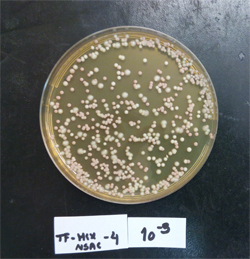
The Port wine sector is of unquestionable economic and social importance, both at the regional and national levels. However, its production remains highly traditional in some critical aspects. Fermentation is one such critical aspect that is not fully controlled, as it is always dependent on endogenous yeast populations (Saccharomyces and non-Saccharomyces), which may or may not have the ability to initiate fermentation. The Porto NS project addresses a specific need in Port wine production: the absence of endogenous non-Saccharomyces yeasts from the Douro demarcated region, selected to optimize the initiation of fermentation in musts intended for Port wine production. The mission of Porto NS is to identify and select a strain and/or set of non-Saccharomyces strains that reflect the typicity of the Douro terroir while maintaining the organoleptic profile of Port wine. At the same time, these strains should allow for greater control of the fermentation process, reducing the risk of harmful yeasts appearing—yeasts that are often associated with spontaneous and uncontrolled fermentations. By selecting these yeasts, Porto NS will not only develop an innovative product—distinctive, endogenous NSAC strains—but will also enable innovation in the fermentation process, allowing for greater control. Consequently, the development of this product will enable the creation of distinctive and innovative Port wines, which will certainly contribute to increasing the sector’s competitiveness and affirming the quality of Port wine in the global market.